벨트 탈수기, 벨트 프레스 필터, cocopeat & 카사바 잔류 물 중국의 탈수 기계 제조업체 – Jiuyi 탈수 장비


Vegetable Residues Belt Press Dehydrators Equipment Introduction
Characteristics of Vegetable Residues:
Vegetable residue is a byproduct of vegetable processing and catering, containing high moisture (80% -95%), rich fiber (15% -30%), and small amounts of vitamins and minerals. Its composition varies slightly with the type of vegetable, and it is prone to spoilage and deterioration.
The sources are concentrated in food processing plants (large batches, low impurities) and catering enterprises (scattered, containing oil and impurities). It can be utilized as a resource, such as being dehydrated and fermented into organic fertilizer, processed into livestock and poultry feed additives, or converted into biomass fuel. It can also be used to extract dietary fiber.
Industry pain points are prominent: high moisture content leads to high collection and transportation costs, and is prone to bacterial contamination of the environment. Pre processing (impurity removal, dehydration) requires investment in equipment and funds. Some enterprises have mishandled, resulting in resource waste and environmental risks.
벨트 프레스 탈수 기계의 장점:
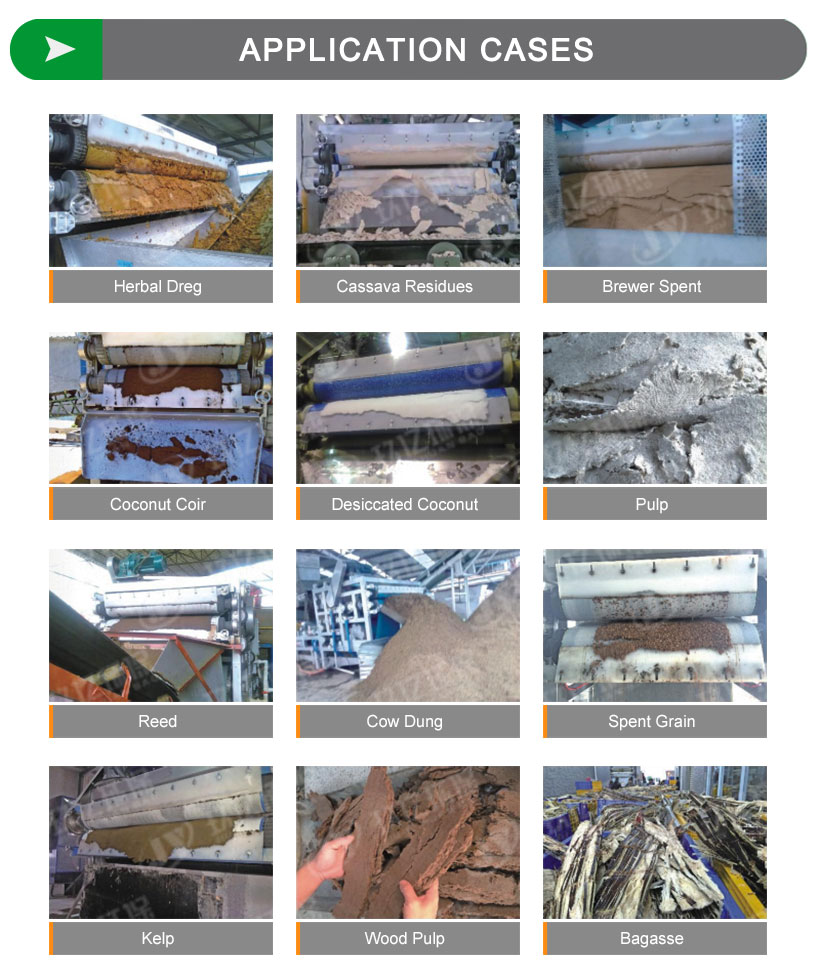
Vegetable residues, containing 80% 에게 95% 수분, high fiber, and perishable components, require effective processing to prevent spoilage. Belt press dehydrators excel in handling these characteristics, utilizing a streamlined process of continuous feeding, sectional pressing, and discharging to support batch processing and preserve material quality. The graded press system, equipped with a filter belt, separates fiber and water efficiently while maintaining the integrity of the residue’s fiber structure.
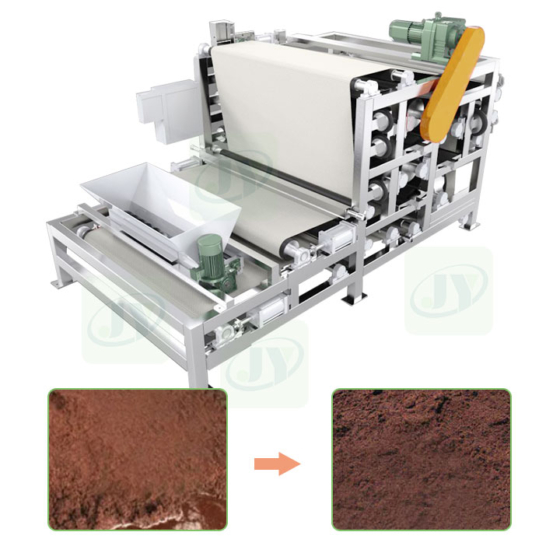
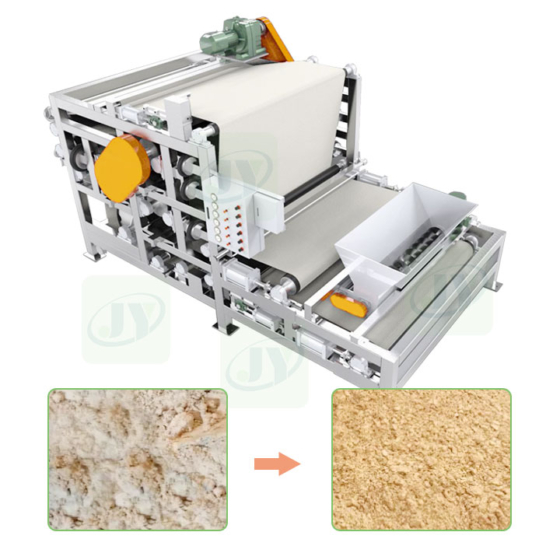
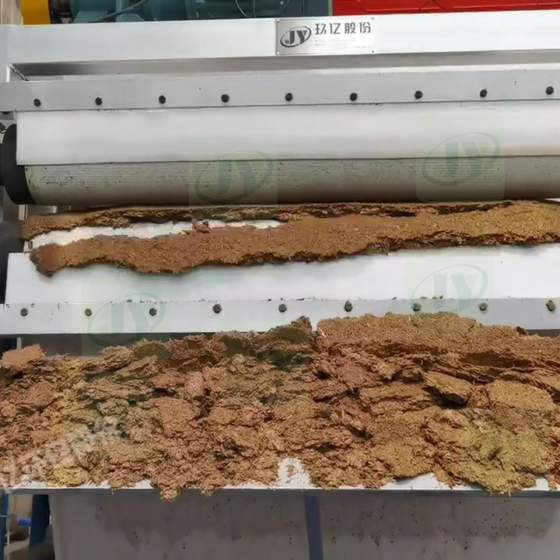
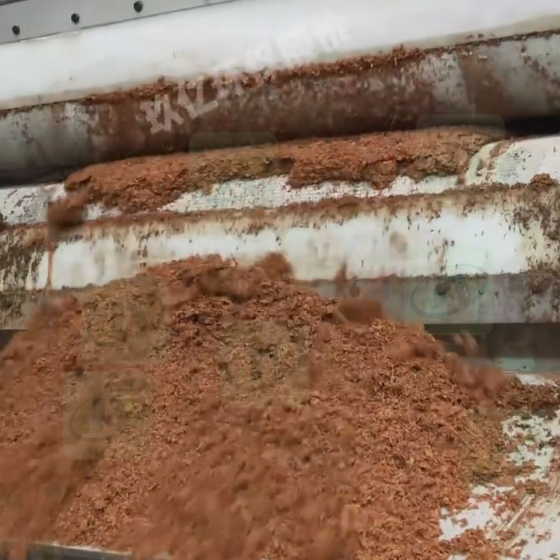
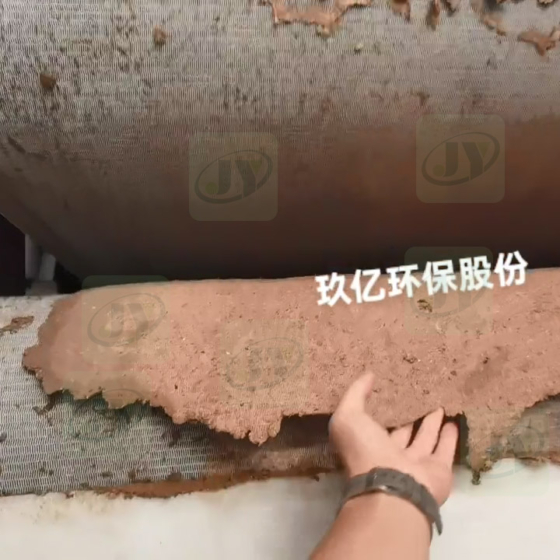
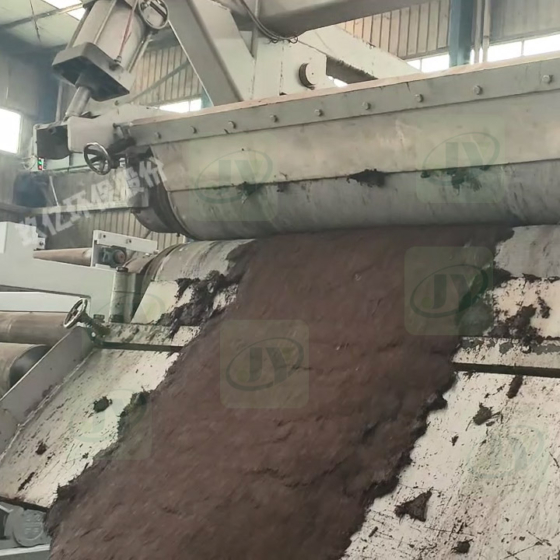
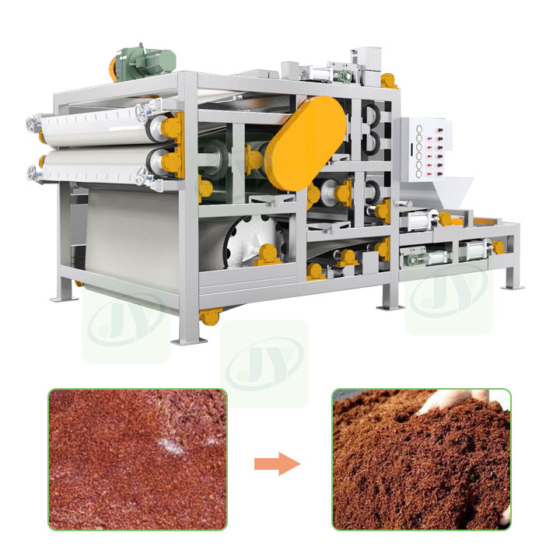
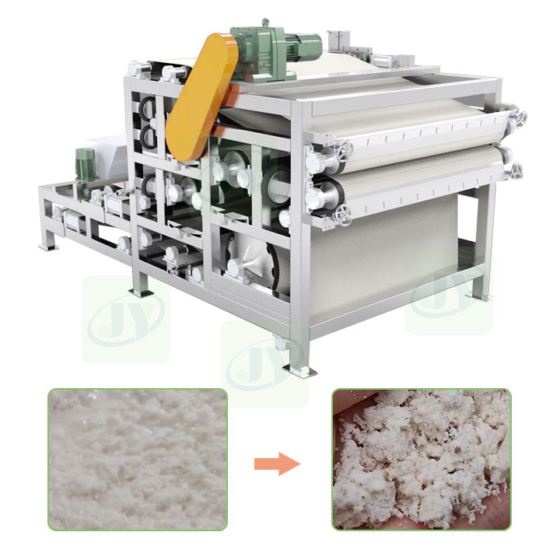
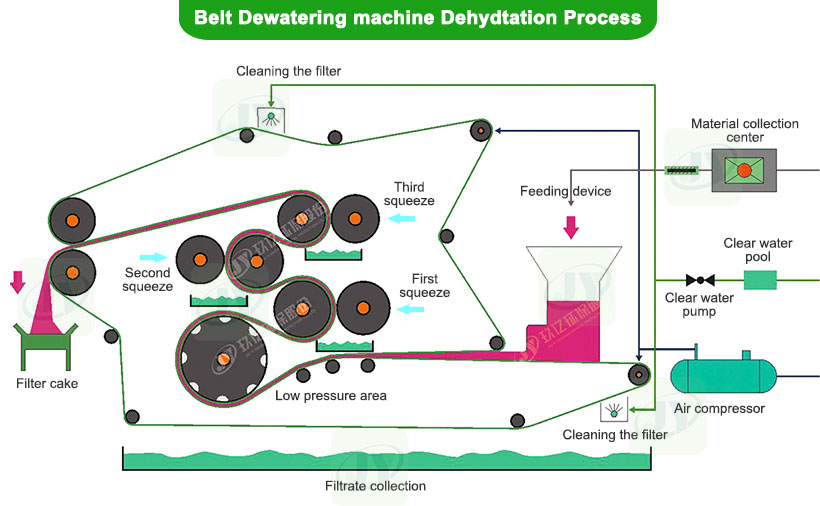
JIUYI’s 벨트 프레스 탈수 기계 processes vegetable residues with precision. The system evenly distributes the material onto the filter screen via a feed distribution mechanism. 다음, the residues enter the dehydration wedge zone and S-shaped dehydration zone for initial extrusion, reducing moisture content. Three sets of high-pressure rollers then further dehydrate the material, significantly lowering its moisture level. The resulting dehydrated vegetable residues serve as organic fertilizers, livestock and poultry feed additives, or biomass fuels, enhancing resource reuse.


Dehydration Principle Of Vegetable residues Belt Dewatering Machine
수분 함량이있는 재료를 운송합니다 80% -90% 컨베이어를 통해 탈수 기계의 호퍼에게, 피더를 통해 필터 벨트에 재료를 골고루 뿌립니다.. 필터 벨트는 장비 작동과 함께 움직입니다., 그리고 한계 플레이트는 재료 층을 평평하게 긁습니다. 동시에, 재료의 두께를 제어하여 완전히 균일하고 일관성을 유지하십시오..
그 다음에, 재료 층 사이에 2 개의 완전 텐션 원형 필터 벨트가 고정됩니다., 운전 롤러에 의해 구동됩니다. 재료는 프리 프레스 탈수 구역을 통해 지속적으로 반복적으로 압박됩니다., 저압 구역, 그리고 많은 양의 수분을 제거하기 위해 3 세트의 압력 롤러 고압 구역.
고객을 만나기 위해 다양한 재료 특성에 따라 압출 압력 및 수유 속도를 조정하십시오.’ 재료 수분에 대한 요구 사항.
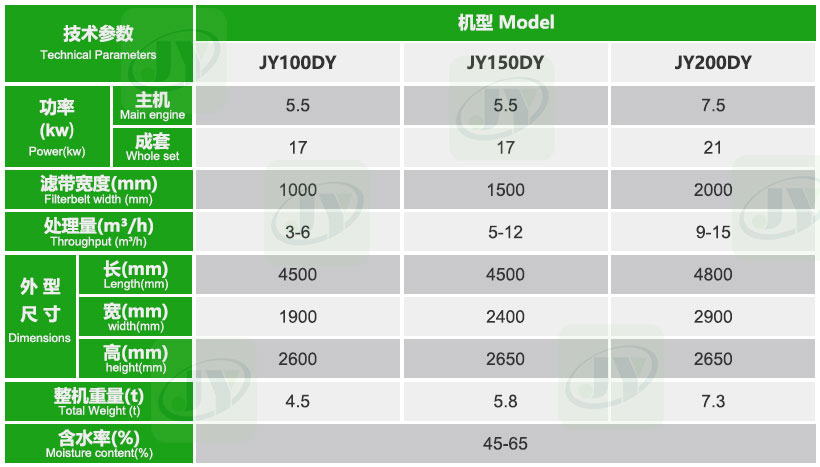
벨트 프레스 탈수기 기술 매개 변수
Jiuyi 브랜드 벨트 Press Dewatering Machine 기능
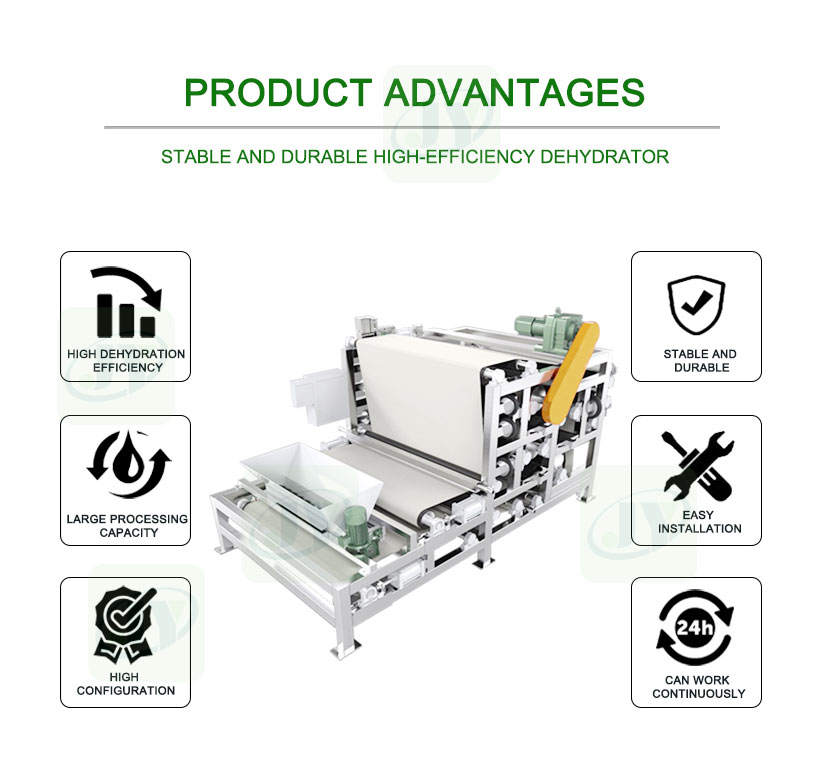
Jiuyi Dehydrators는 수년간의 재료 탈수 경험을 바탕으로 우리가 독립적으로 개발 한 새로운 세대의 고효율 프레스 탈수 장비입니다.. 그것은 다른 재료의 지속적인 대규모 및 깊은 탈수 문제를 성공적으로 해결했습니다..
1. 저전력 소비, 저음, 높은 생산 효율성.
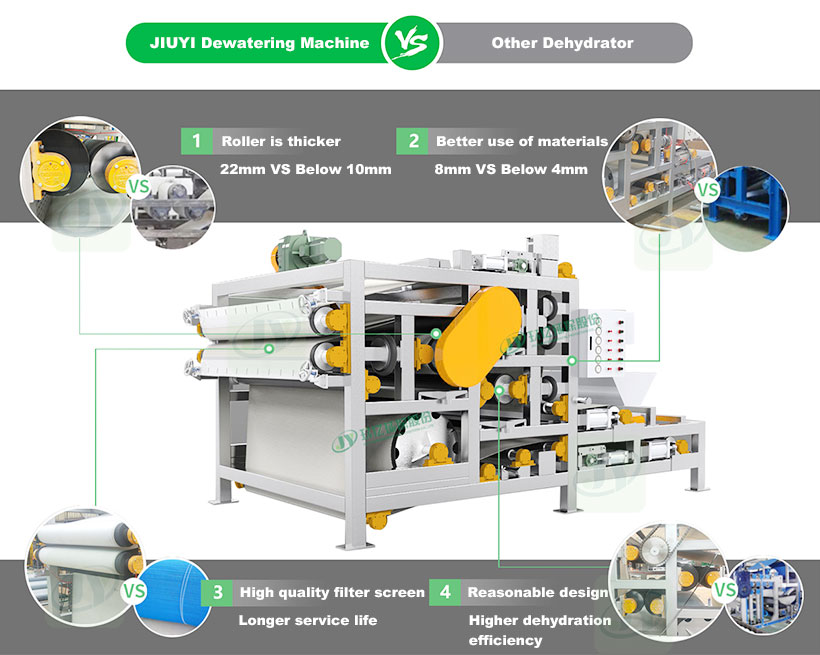
2. 이 기계는 매우 긴 필터링 구역을 채택합니다, 다수의 탈수를위한 강한 압력 롤러와 결합, 탈수 효율이 높고 처리 용량이 크게 증가합니다.
3. 자동 필터 천 청소 시스템, 수동 개입이 필요하지 않습니다.
4. 자동 직물 장치 채택, 수유는 매끄럽고 신뢰할 수 있습니다.
4. 가공 및 제조를위한 고품질 방지 재료 및 구성 요소를 선택하십시오..
5. 고급 및 안정적인 필터 벨트 보정 및 텐션 장치는 장기 안정적인 작동을 보장 할 수 있습니다..
6. 가변 주파수 드라이브 제어, 조정 가능한 생산 속도.
7. 지속적으로 실행할 수 있습니다 24 시간, 높은 자동화로, 간단한 작동, 쉬운 유지 보수.
8. 광범위한 응용 프로그램을 갖춘 고급 구조 설계.
9. 탈수기의 구동 롤러 및 압착 롤러는 고품질 재료로 코팅됩니다..