Deshidratón de correa, Filtro de prensa de cinturón, turba de coco & Fabricante de máquinas deshidratadoras de residuos de yuca en China – Equipo de deshidratación jiuyi


Straw Residue Pulp Belt Dewatering Machine Equipment Introduction
Characteristics of Straw Residue Pulp:
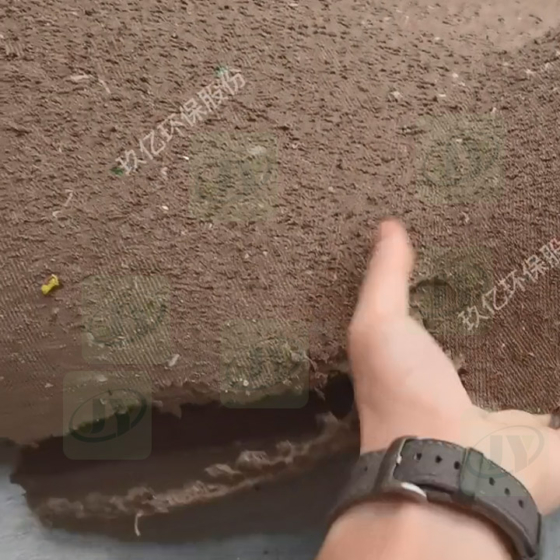
The fiber length of straw residue (such as crushed wheat, corn, and rice straw) is mostly between 1-5mm, with a fluffy texture and strong toughness. The initial moisture content of fresh straw residue is as high as 85% -95%. If not treated, it is prone to mold growth and odor generation.
Rich in cellulose, hemicellulose, and lignin, as well as small amounts of nitrogen, phosphorus, potassium, and organic matter, it has the basic conditions for conversion into energy, fertilizer, or materials, and the fiber structure is stable with strong degradation resistance.
In traditional processing, straw residue is often burned or randomly piled up, which not only pollutes the air and occupies land, but also may cause fires. But after scientific processing (such as belt dewatering to a moisture content of 55% -70%), it can achieve “turning waste into treasure” and meet the needs of green circular economy.
Advantages of belt press dewatering machine:
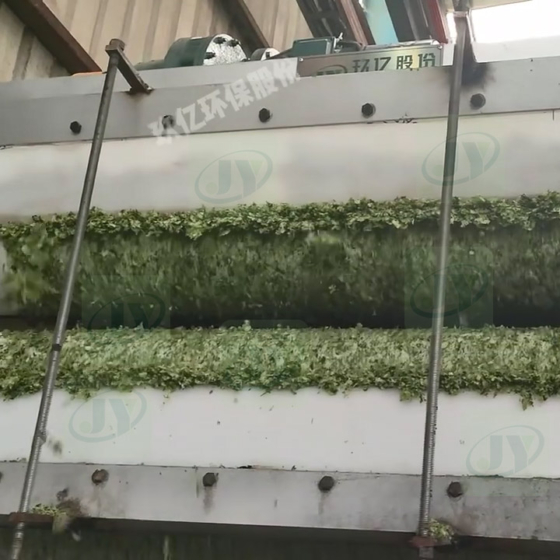
Straw residue fibers, thick and long, contain impurities like broken leaves and roots. The belt dewatering machine uses a wide filter belt with a large-pore design to prevent fiber entanglement and equipment blockage. Operators can adjust the filter belt’s speed to match the straw residue’s fluffiness, ensuring smooth feeding.
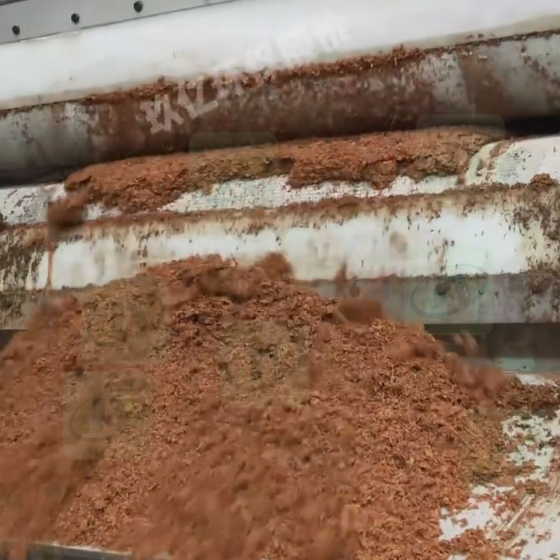
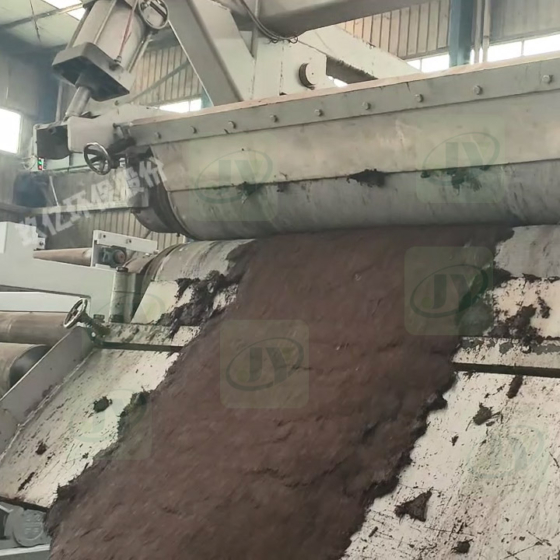
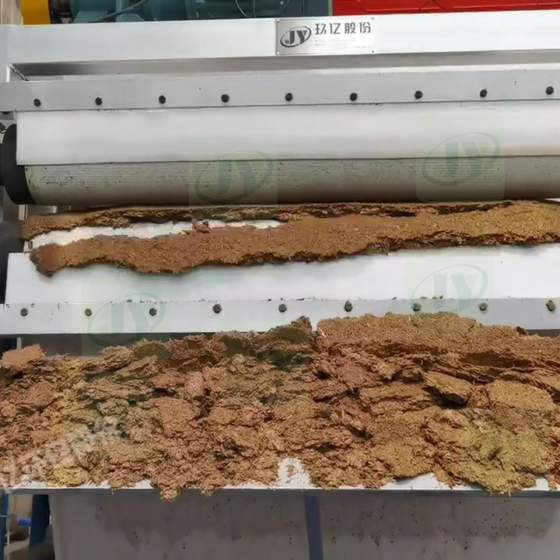
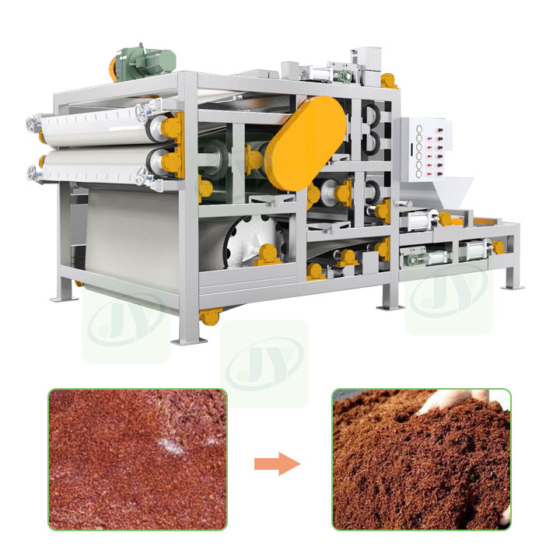
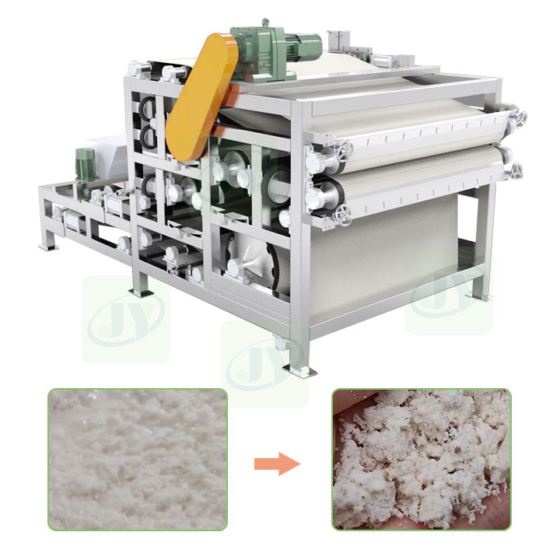
The belt dewatering machine supports 24-hour continuous operation and maintains straw residue moisture content between 55% and 70% through multi-roll graded pressing (pre-pressing roller + high-pressure roller). After dewatering, the machine compresses straw residue volume by 40%–60%, significantly reducing its weight. This saves warehouse storage space and lowers logistics and secondary processing costs.
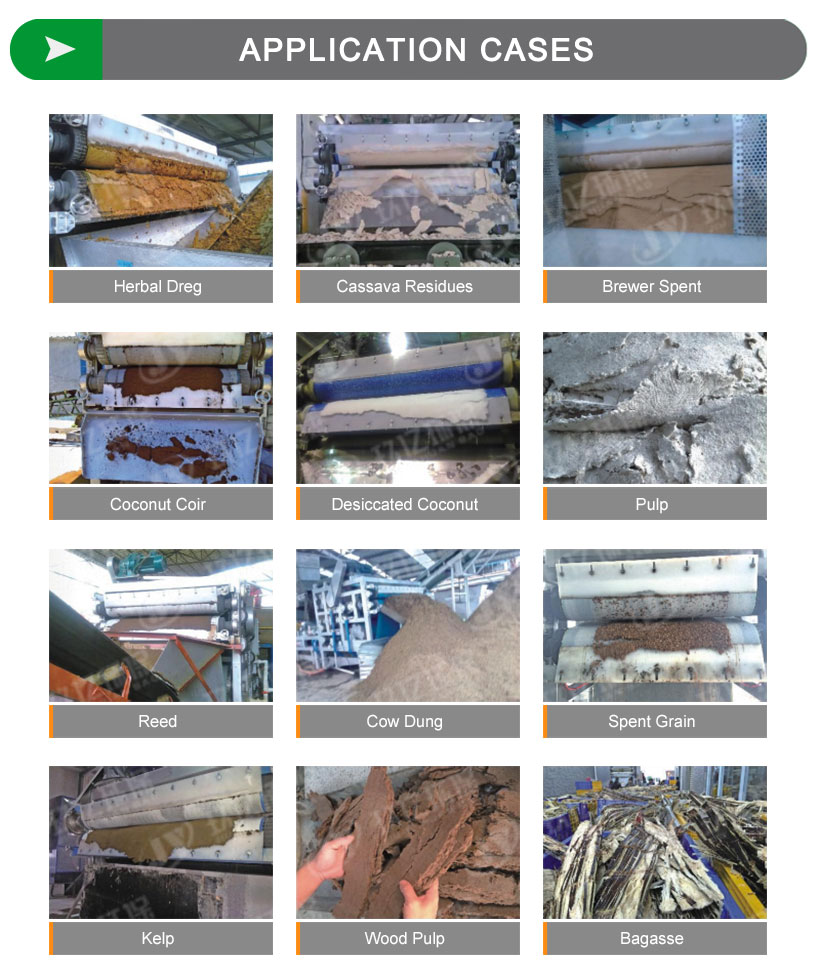
The mechanical extrusion dewatering process, gentle and free of high temperatures or intense crushing, preserves the fiber structure of straw residue. The dewatered residue suits applications like organic fertilizers, biogas production, biomass fuels, eco-friendly boards, pulp products, and sewage purification.
For large-scale straw residue processing, the belt press dewatering machine enables continuous feeding and discharging without intermittent shutdowns, aligning with batch production rhythms. Operators can adjust the filter belt’s speed, squeezing roller pressure, and tension to control the moisture content of dewatered straw residue, preventing fiber breakage from excessive squeezing.


Dehydration Principle Of Straw Residue Pulp Belt Dewatering Machine
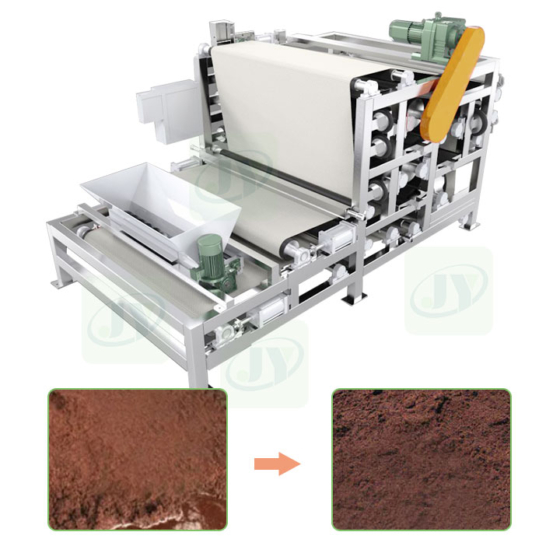
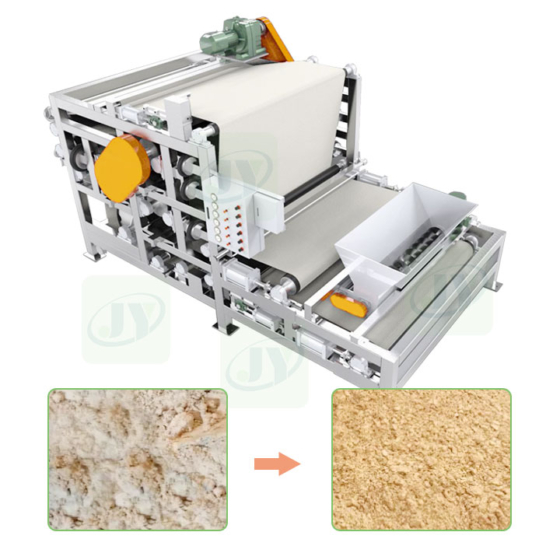
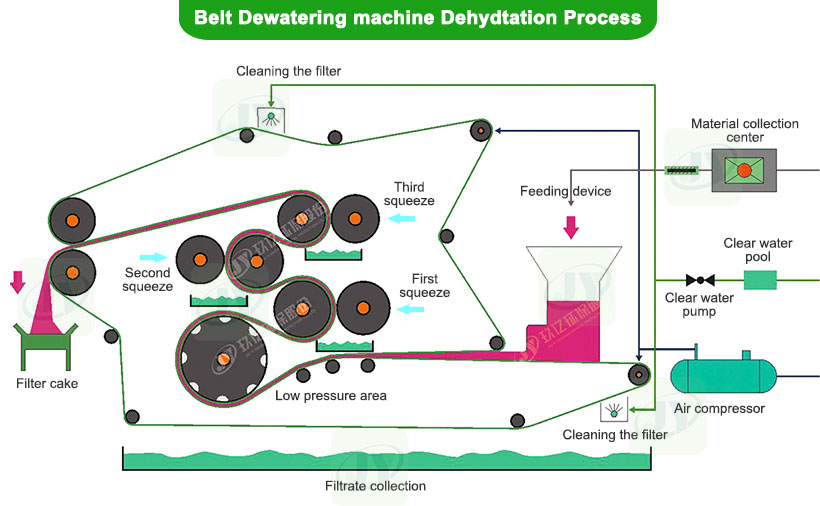
Transporte de materiales con un contenido de humedad de 80% -90% a la tolva de la máquina deshidratadora a través de un transportador, y distribuya uniformemente los materiales en la cinta del filtro a través de un alimentador en espiral. La cinta filtrante se mueve con el funcionamiento del equipo., y la placa límite raspa la capa de material hasta quedar plana. Al mismo tiempo, controlar el espesor del material para hacerlo completamente uniforme y consistente;
Entonces, Entre la capa de material se sujetan dos correas filtrantes circulares completamente tensadas., impulsado por el rodillo impulsor. El material se exprime continua y repetidamente a través de la zona de deshidratación previa a la prensa., zona de baja presión, y tres juegos de rodillos de presión de zona de alta presión para eliminar una gran cantidad de humedad.
Ajuste la presión de extrusión y la velocidad de alimentación según las diferentes características del material para satisfacer a los clientes.’ Requisitos para la humedad del material..
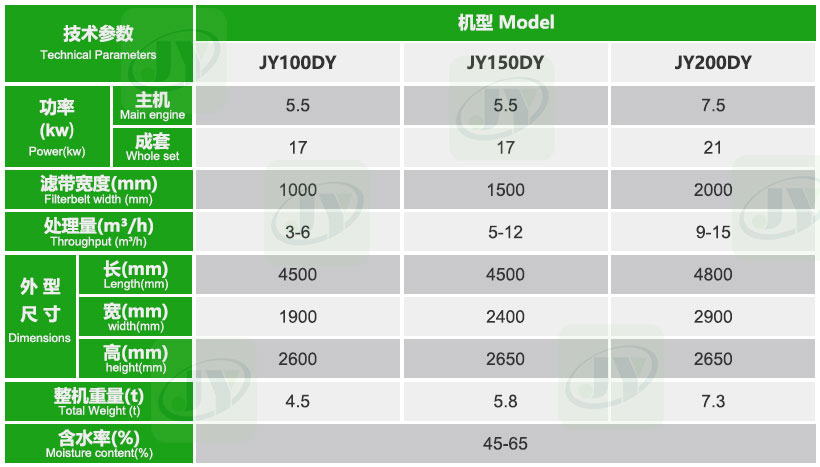
Belt Press Dehydrators Technical Parameter
JIUYI Brand Belt Press Dewatering Machine Feature
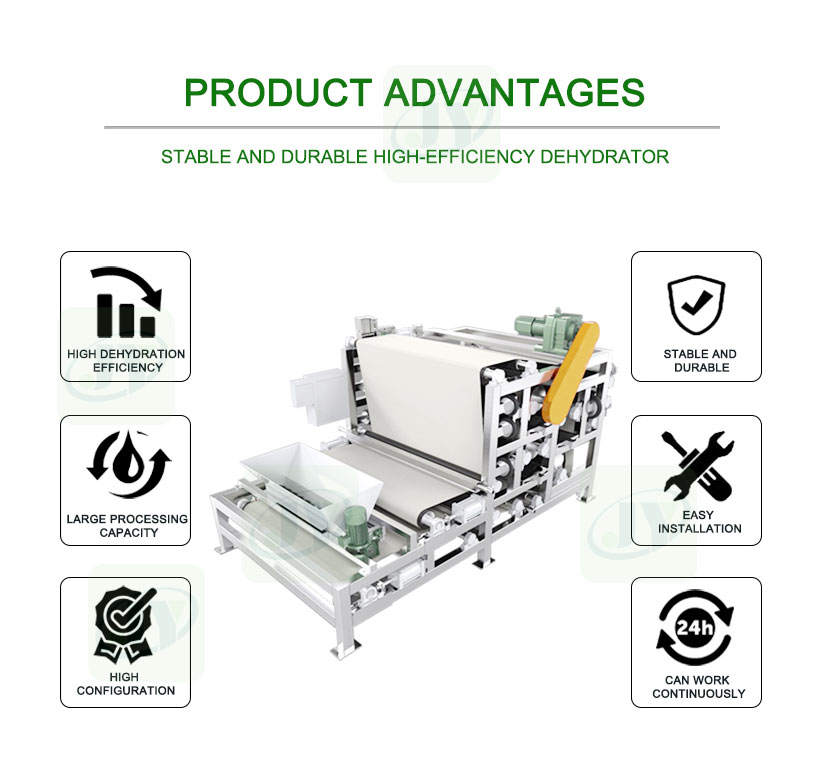
JIUYI dehydrators is a new generation of high-efficiency press dewatering equipment independently developed by us based on years of material dewatering experience and combined with similar dewatering equipment technologies at home and abroad. Ha resuelto con éxito el problema de la deshidratación profunda y continua a gran escala de diferentes materiales..
1. Bajo consumo de energía, bajo ruido, alta eficiencia de producción.
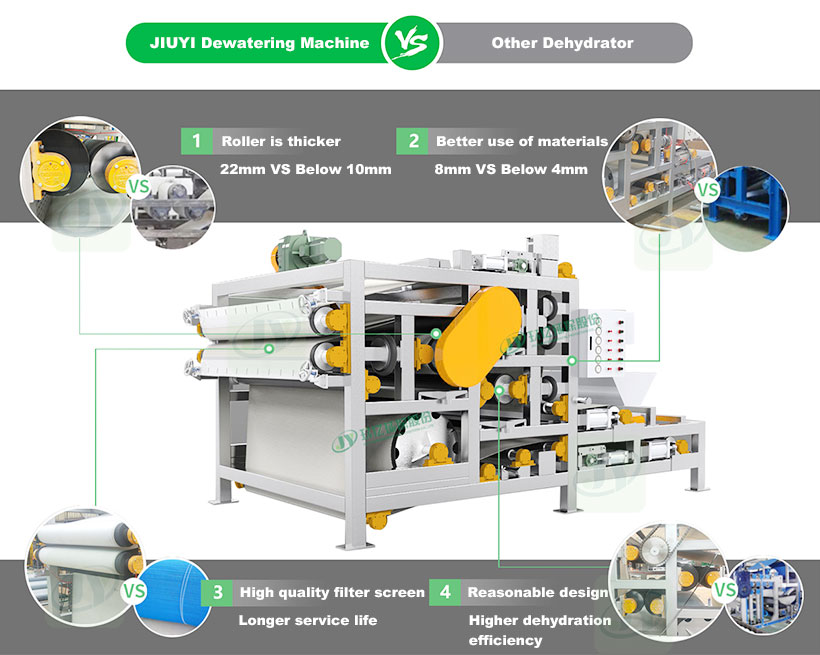
2. La máquina adopta una zona de filtrado ultralarga., combinado con fuertes rodillos de presión para deshidrataciones múltiples, lo que resulta en una alta eficiencia de deshidratación y una gran capacidad de procesamiento.
3. Sistema automático de limpieza de tela filtrante., no se requiere intervención manual.
4. Adopción de un dispositivo de tejido automático., la alimentación es suave y confiable.
4. Seleccione materiales y componentes anticorrosivos de alta calidad para su procesamiento y fabricación..
5. El dispositivo tensor y de corrección de la correa del filtro avanzado y confiable puede garantizar un funcionamiento estable a largo plazo.
6. Control de variador de frecuencia, velocidad de producción ajustable.
7. Puede funcionar continuamente durante 24 horas, con alta automatización, operación sencilla, y fácil mantenimiento.
8. Diseño estructural avanzado con una amplia gama de aplicaciones..
9. El rodillo impulsor y el rodillo exprimidor del deshidratador están recubiertos con materiales de alta calidad..